
The transition to e-mobility in Kenya is accelerating. It is also, without deliberate intervention, at risk of leaving women behind, again.
E-mobility is projected to create 3.3 million jobs across Africa by 2030. New roles are emerging daily; EV technicians, charging infrastructure managers, e-bus conductors, fleet supervisors, sustainability leads. These are good jobs. Well-paying jobs. Future-facing jobs. And yet, research consistently shows that without intentional inclusion strategies, emerging industries default to existing patterns of exclusion. Women enter late, advance slowly and lead rarely.
Kenya's transport sector already reflects this reality. Fewer than 13% of formal transport roles are held by women. Sexual and gender-based violence affects 88% of women using public transport. And in the fast-growing e-mobility sub-sector, women's participation in technical and leadership roles remains critically low.
Changing that will not happen by accident. It will happen in boardrooms, in training centres, in mentorship conversations and in networking rooms like the one at Sarova Stanley, Nairobi, on 4th June 2026.
"Mention her name in the boardroom. Be her mentor."
That moment captured everything the Women in E-Mobility Networking Session was designed to create: a space honest enough for the hard truths, warm enough for the vulnerable ones, and purposeful enough to turn both into action.
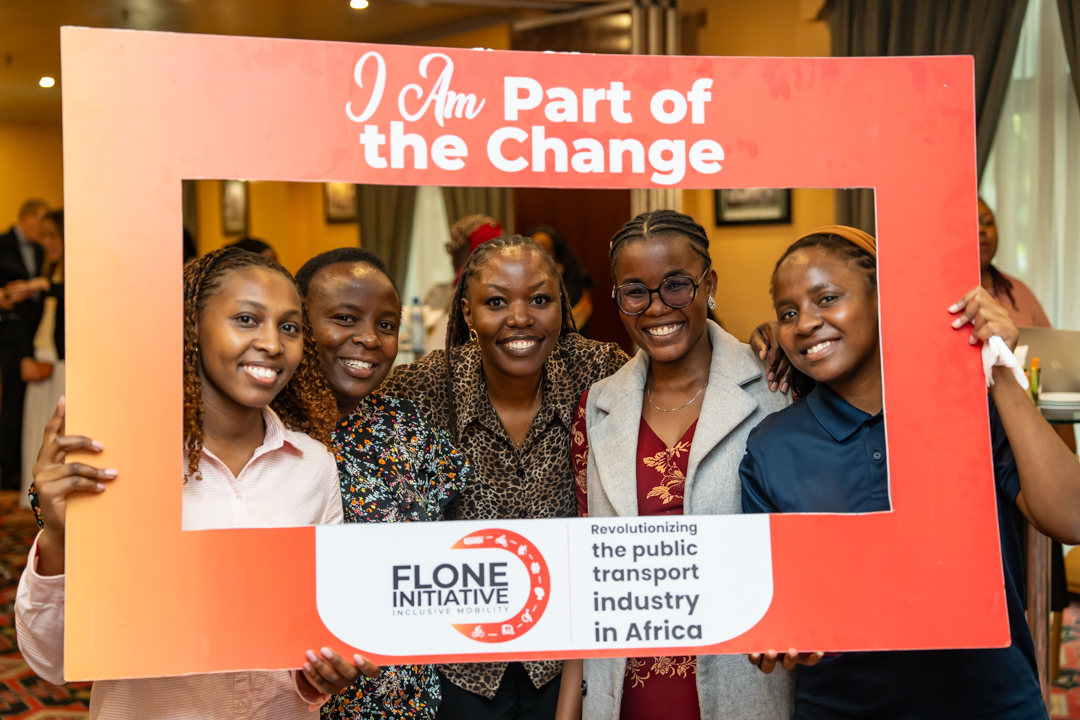
Hosted by Flone Initiative as a side event of the KPLC E-Mobility Conference 2026, the session convened approximately 120 women from across Kenya's e-mobility ecosystem: engineers, transport operators, entrepreneurs, policymakers, project managers, advocates and emerging leaders; women at every stage of their journey in Kenya's rapidly evolving e-mobility sector. They did not come simply to exchange cards. They came to build something.
Kenya's transition to sustainable transport is accelerating. E-mobility is no longer a future conversation, it is happening on the roads, in boardrooms and across the policy landscape right now. And with that transition comes an extraordinary opportunity: the chance to build an industry that looks different from the ones that came before it.
But opportunity does not become reality without intention. Women remain significantly underrepresented in technical, leadership and decision-making roles across the transport sector, not because they lack the skills, the drive or the vision, but because the systems, networks and structures that create access have not historically been designed with them in mind.
That is the gap this session was designed to close. Not in two hours, but in the relationships, commitments and conversations it set in motion.
The session featured women leaders whose words cut through the noise and landed with the kind of clarity that stays with you long after you leave the room.
Edna Mercy, Director of Transport Futures, spoke to something most women in the room had felt but few had named out loud: the quiet voice that says you do not belong here, that you are not qualified enough, experienced enough, or ready enough.
"Silence the imposter syndrome and do your thing. The industry needs exactly what you bring."
Her message was not a motivational slogan. It was a directive, backed by years of navigating a sector that had not always made space for her, and a conviction that the next generation of women should not have to spend their energy fighting the same internal battles.
Faith Waraki, Global STEM Leader and Founder of the Green Women Accelerator, pushed the conversation into the technical. She challenged participants to understand the full e-mobility ecosystem: batteries, charging infrastructure, software, policy, business models, not just the slice that is immediately familiar. But her most powerful challenge was not technical. It was relational.
"If you can carry another woman to the next level, do it. Open the door. Say her name in the boardroom. Be her mentor."
In a sector where women's networks are still being built, sponsorship, actively using your position to open doors for others is not a nice-to-have. It is the mechanism by which inclusion actually multiplies.
Judith Otieno, Head of Operations & Project Management at ARC Ride Kenya, brought practical accountability to the room. Her message was direct: advancement in this sector requires active strategy, not passive hope.
"As women, we must be intentional about our career growth. We cannot rely solely on opportunities finding us—we need to actively build our skills, expand our networks, seek mentors, and position ourselves for the roles we aspire to hold."
The message reframed a common frustration, the sense that career doors open for others more easily, into something actionable. You are not waiting to be discovered. You are building.
Three themes surfaced across nearly every conversation in the room:
- Overcoming barriers to leadership and advancement: Navigating structural, cultural, and psychological walls in male-dominated sectors.
- Building technical expertise and sector knowledge: Creating accessible pathways into e-mobility's rapidly evolving technical landscape.
- Strengthening mentorship, sponsorship, and networks: Recognizing that actively opening doors shapes future opportunity in profound ways.
The session lasted two hours. Its full impact is still unfolding.
We believe that women across Kenya's e-mobility ecosystem left with the foundation for meaningful professional connections. That naming shared experiences openly, perhaps began to reduce the isolation that often accompanies being the only woman in a room. That seeds of collaboration and mentorship were planted. And that the confidence and visibility strengthened that afternoon will carry women further than they might have gone alone.
Flone Initiative is committed to creating lasting, systemic change in how women participate in, lead and benefit from Kenya's e-mobility transition. That means training programmes, Policy advocacy, Institutional partnerships, Inclusion audits and yes, the spaces where women find each other, speak honestly and decide together what they are going to build.
"Because the most important infrastructure for women in e-mobility is not a charging station or a fleet policy… It is a network of people who will say her name when she is not in the room."
This event was made possible through the generous support of partners who understand that inclusive mobility is not a parallel agenda to sustainable development, it is central to it. Flone Initiative extends sincere appreciation to the United Nations Environment Programme (UNEP), GIZ Kenya and the Federal Ministry for Economic Cooperation and Development (BMZ) for their continued commitment to advancing women's participation and leadership in Kenya's e-mobility transition.
And to every woman who showed up, who shared her story, exchanged a contact, asked a question or offered encouragement:
Thank you for helping build the future of women in e-mobility.